
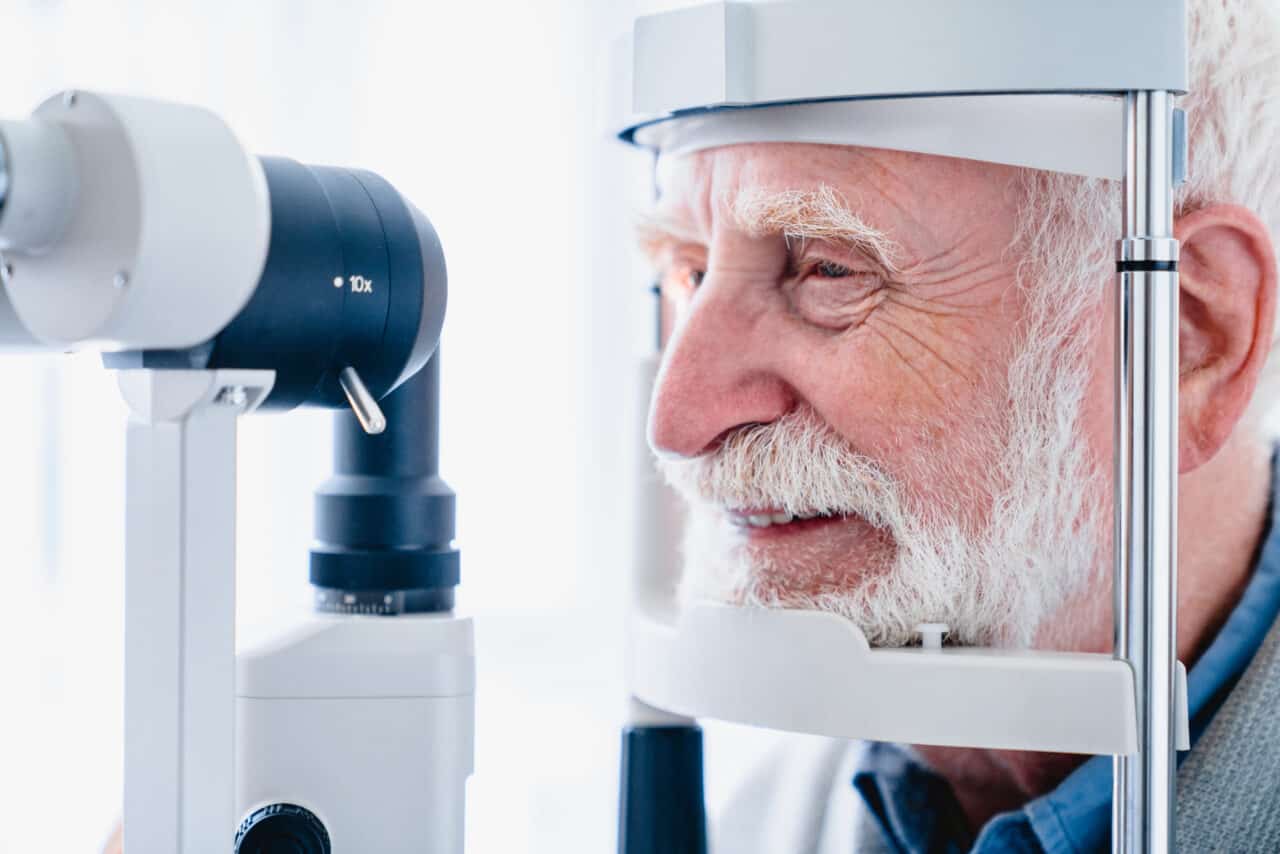
Our eyes, the windows to the world, undergo many changes as we age. From the sparkling innocence of youth to the seasoned wisdom of older years, our eyesight accompanies us through life’s journey. However, the passage of time brings about subtle yet significant transformations within our eyes.
Understanding how aging affects our eyes and recognizing the prevalent issues that arise with time is crucial for maintaining optimal eye health. This article will explore some common age-related eye problems.
Ways Age Can Affect Your Eyes
Remember, even though many eye problems are more common as we age, they can affect people at any age. If you notice any symptoms or changes in your vision, contact your eye doctor immediately. Here are some common age-related eye disorders and diseases.
Common Age-Related Eye Problems
Here are some of the most common age-related eye problems.
Presbyopia
Have you ever had to hold something out at arm’s length to be able to read it? If so, presbyopia may be the culprit.
The development of presbyopia is a normal process that happens slowly. Many people don’t notice changes until their late 30s or early 40s. Reading glasses or bifocals can help improve your vision.
Floaters
Floaters are tiny specks that float across your field of vision. Most people notice them outside on a sunny day or in a bright room.
While oftentimes floaters are normal, they can also signal eye problems such as retinal detachment (especially if you also see flashes of light). If you notice a sudden change in the number of specks for flashes, you should see your eye care professional as soon as possible.
Dry Eyes
Also known as keratoconjunctivitis sicca, dry eyes happen when your tear glands don’t produce enough or low-quality tears. They can be uncomfortable and cause burning, itching, and possibly some degree of vision loss. Special eye drops or a humidifier are typical recommendations for treating dry eyes.
Watery Eyes
Also known as epiphora, having too many tears can result from wind, temperature changes, or light sensitivity. Wearing sunglasses and shielding your eyes can oftentimes solve the problem. Watery eyes can also indicate a more serious condition, such as a blocked tear duct or an eye infection.
Common Age-Related Eye Disorders and Diseases
Cataracts
Cataracts are cloudy areas in the lens at the front of your eye. Typically, the lens is clear. However, cataracts cause blurry vision by blocking light from passing freely through the lens to the retina.
Cataracts form slowly and don’t cause redness, pain, or tearing. While some stay small and don’t affect the vision, some may become thick or large, significantly affecting your vision, and must be removed with surgery.
Cataract surgery is one of the most common surgeries performed worldwide. During the surgery, your doctor will remove the clouded lens and replace it with a clear plastic lens, bringing vision back to normal.
Glaucoma
Unlike cataracts, which cause cloudy vision, glaucoma results from increased pressure inside your eye and often has no symptoms. Left untreated, it can lead to permanent vision loss and blindness.
Risk factors include age, heredity, race, diabetes, and some medication. Less common causes include blunt object injuries, chemical injuries, blocked blood vessels, inflammatory disorders, severe eye infections, and sometimes corrective eye surgery.
To diagnose glaucoma, your doctor will examine your eyes and assess the appearance of the optical nerve, test your visual field, and measure the pressure in your eye. It is also possible to have damage from glaucoma, even with normal eye pressure. Treatment for glaucoma could include prescription eye drops, oral medications, surgery, or laser treatment.
Retinal Disorders
The retina is a thin lining on the back of the eye made up of cells that detect images and pass them on to the brain. If you have a retinal disorder, the transfer of those images is interrupted.
Common retinal disorders include:
- Age-Related Macular Degeneration (AMD) — AMD affects the macula, the central part of the retina, causing a loss of central vision. This condition can progress slowly or rapidly, leading to challenges in activities requiring detailed vision, like reading or recognizing faces.
- Diabetic Retinopathy — This condition occurs in individuals with diabetes and affects the blood vessels in the retina. Over time, it can cause vision loss, ranging from mild blurriness to complete blindness.
- Retinal Detachment — Retinal detachment and macular holes happen when the inner and outer layers of the retina separate. Symptoms include sudden flashes of light or the sudden appearance of spots, wavy vision, and dark shadows in your field of vision.
Corneal Diseases
The cornea is transparent and dome-shaped and acts as a “window” to your eye, helping to focus light as it enters your eye. Damage to the cornea can occur due to injury, infection, disease, and other elements. Your doctor may prescribe medicated eye drops, or surgery may be necessary.
Conjunctivitis
Also known as “pink eye,” conjunctivitis occurs when the tissue that covers the sclera and lines the eyelid becomes inflamed. This can result in redness, burning, itching, tearing, and feeling like something is in your eye. If a viral or bacterial infection causes pink eye, it is highly contagious.
Temporal Arteritis
Temporal arteritis occurs when the arteries in your temples and other areas of your body become inflamed and obstructed. The first sign is typically a severe headache, tenderness in the temple area, and pain while chewing. You could also have a chronic fever, weakness in the hip or shoulder, and your scalp may be tender, followed by a sudden loss of vision (which is usually permanent).
Temporal arteritis is most commonly seen in older women. If you are experiencing any of these symptoms, contact your eye doctor immediately.
Turn to New Vision Eye Center If You’re Experiencing Age-Related Vision Problems
Our eyes deserve our utmost care and attention as we age. Understanding the changes they undergo and being aware of the prevalent age-related eye issues empowers us to take proactive steps toward maintaining good vision and eye health. Aging may alter the lens through which we see the world, but with proper care, our eyes can continue to witness life’s beauty with clarity and vibrancy.
The doctors at New Vision Eye Center provide World-Class Eye Care™ to patients on the Treasure Coast using the latest technology and minimally invasive treatments. We are leaders in advanced cataract surgery, glaucoma surgery, surgical and medical retina care, LASIK laser vision correction, eyelid surgery, and general ophthalmology.
Take the first step at lowering your risk of age-related vision problems by seeing one of our highly skilled doctors. Contact us today to schedule an appointment.