
Diabetes is one of the most common health problems affecting Americans today. The Centers for Disease Control estimates that 38.4 million people, or 11.6 percent of the population, have diabetes. Of those, 22.8 percent, or 8.7 million people, are undiagnosed.
While blood sugar imbalance is the most well-known symptom of diabetes, there are other complications that come with this disease. People with Type 1, Type 2, and gestational diabetes are at risk for developing an eye problem called diabetic retinopathy.
This article will provide an overview of diabetic retinopathy, its symptoms, and available treatments. Staying up to date with your eye appointments, effectively managing your diabetes, and knowing what symptoms to look out for is vital in preventing and effectively treating this disease.
What is Diabetic Retinopathy?
Diabetic retinopathy occurs when high blood sugar levels cause blood vessels in the retina to swell, leak, or close. This can also cause new abnormal blood vessels to grow. All of these blood vessel changes can contribute to vision loss. There are two main stages of the disease:
Non-Proliferative Diabetic Retinopathy (NPDR)
The early stage of diabetic eye disease is known as non-proliferative diabetic retinopathy or NPDR. This stage is characterized by small areas of balloon-like swelling in the retina’s tiny blood vessels, known as microaneurysms.
As the condition progresses, blood vessels in the retina may leak fluid or blood, causing the retina to swell or form deposits called exudates. NPDR can be mild, moderate, or severe based on the extent of these changes.
Proliferative Diabetic Retinopathy (PDR)
Proliferative diabetic retinopathy is the advanced stage of the disease. It occurs when new blood vessels (neovascularization) grow abnormally on the surface of the retina or into the vitreous gel, which can lead to serious vision problems. These new blood vessels are fragile and prone to bleeding, which can cause vision loss and even detach the retina if left untreated.
Diabetic Macular Edema (DME)
In addition to these stages, diabetic macular edema (DME) can occur at any stage of diabetic retinopathy. It is caused by fluid leaking from abnormal blood vessels in the retina, causing the macula to swell.
The macula is the part of the retina responsible for central vision. This swelling is the most common reason people with diabetes lose their vision.
What are the Symptoms of Diabetic Retinopathy?
Because there are often no symptoms in the early stages, you might have diabetic retinopathy and not know it. As the condition advances, symptoms may include:
- Blurred Vision — This can occur when the macula, the part of the retina responsible for sharp central vision, swells due to fluid leakage (diabetic macular edema).
- Floaters — These are spots or dark strings that drift across your field of vision. They are caused by the presence of blood or other debris from leaking blood vessels.
- Impaired Color Vision — Colors may appear faded or washed out.
- Vision Fluctuations — Vision may fluctuate or change from day to day.
- Dark or Empty Areas in Vision — These can occur if blood leaks into the center of the eye (vitreous) or if scar tissue from neovascularization contracts and causes the retina to detach.
- Vision Loss — In severe cases, diabetic retinopathy can cause significant vision loss or even blindness.
How is Diabetic Retinopathy Diagnosed?
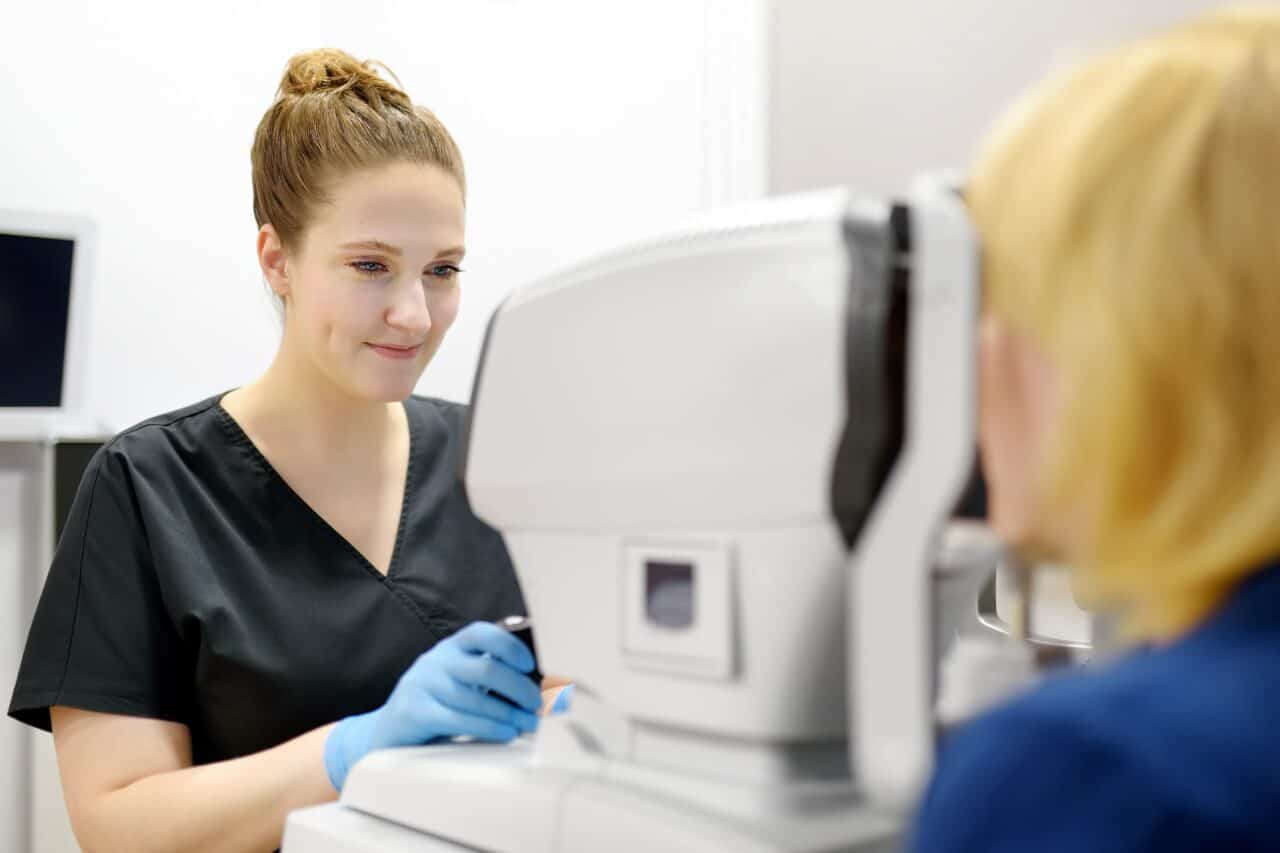
Diabetic retinopathy is diagnosed through a comprehensive eye examination by an eye care professional, typically an ophthalmologist or optometrist. Some tools your doctor might use include the following:
Dilated Eye Exam
During this exam, drops are placed in your eyes to dilate (widen) the pupils. This allows the eye care professional to examine the retina and optic nerve at the back of the eye using a special magnifying lens. The dilation enables a detailed view of the blood vessels, optic nerve, and other structures at the back of the eye to check for any signs of diabetic retinopathy.
Optical Coherence Tomography (OCT)
This noninvasive imaging test provides cross-sectional images of the retina. It helps detect and monitor retinal swelling (edema) or thickness, which can be caused by diabetic macular edema.
Fluorescein Angiography
In this test, a fluorescent dye is injected into a vein in your arm. The dye travels through the blood vessels in your retina, and a special camera takes rapid-fire photographs as the dye circulates. This helps identify any leaking blood vessels or abnormal blood flow in the retina.
What Treatments Are Available?
Several treatments are available for diabetic retinopathy. Factors such as the specific type and severity of diabetic retinopathy, the presence or absence of macular edema, the extent of retinal damage, and individual patient characteristics are all considered when prescribing treatment.
Medication
A category of medications called anti-VEGFs can be given as an injection to treat diabetic retinopathy. Vascular endothelial growth factor (VEGF) is a protein that contributes to abnormal blood vessel growth and leakage in diabetic retinopathy.
Anti-VEGF medications can be injected into the vitreous gel of the eye to reduce swelling and leakage from abnormal blood vessels, particularly in cases of diabetic macular edema. Corticosteroids injected into the eye can also help reduce macular edema.
Laser Treatment
Laser treatments such as focal laser treatment and pan-retinal photocoagulation (PRP) can address the symptoms of diabetic retinopathy. In focal laser treatment, a laser is used to seal leaking blood vessels and reduce swelling in the macula. With PRP, the laser is applied to areas of the retina away from the macula to shrink abnormal blood vessels and prevent them from growing and causing bleeding or retinal detachment.
Surgery
A surgical procedure called vitrectomy may be performed in advanced cases where there is extensive bleeding into the vitreous or tractional retinal detachment (where scar tissue contracts and pulls on the retina). During vitrectomy, the vitreous gel and any blood or scar tissue in the eye are removed and replaced with a clear solution.
How to Prevent Diabetic Retinopathy
Diabetic retinopathy can be hard to catch early, as there are often no noticeable symptoms until the disease has progressed. For individuals with diabetes, the American Diabetes Association recommends an eye exam with dilation at least once a year. Early detection and timely treatment can significantly reduce the risk of vision loss associated with diabetic retinopathy and improve outcomes while the condition is still reversible.
Since high blood pressure is also a contributing factor to diabetic retinopathy, taking steps to control your blood pressure can also help prevent the development of this disease. These include eating a healthy diet, getting regular exercise, not smoking, and moderating alcohol intake.
Need a Comprehensive Diabetic Eye Exam? Turn to New Vision Eye Center
Early detection and timely treatment can prevent or slow the progression of diabetic retinopathy and reduce the risk of vision loss. If you have diabetes, it’s essential to follow your healthcare provider’s recommendations for regular eye screenings and promptly report any changes in your vision.
At New Vision Eye Center, our doctors provide world-class eye care to patients of the Treasure Coast and beyond. If you have diabetes and it’s been a while since your last exam, contact us to schedule an appointment and take charge of your health today.