
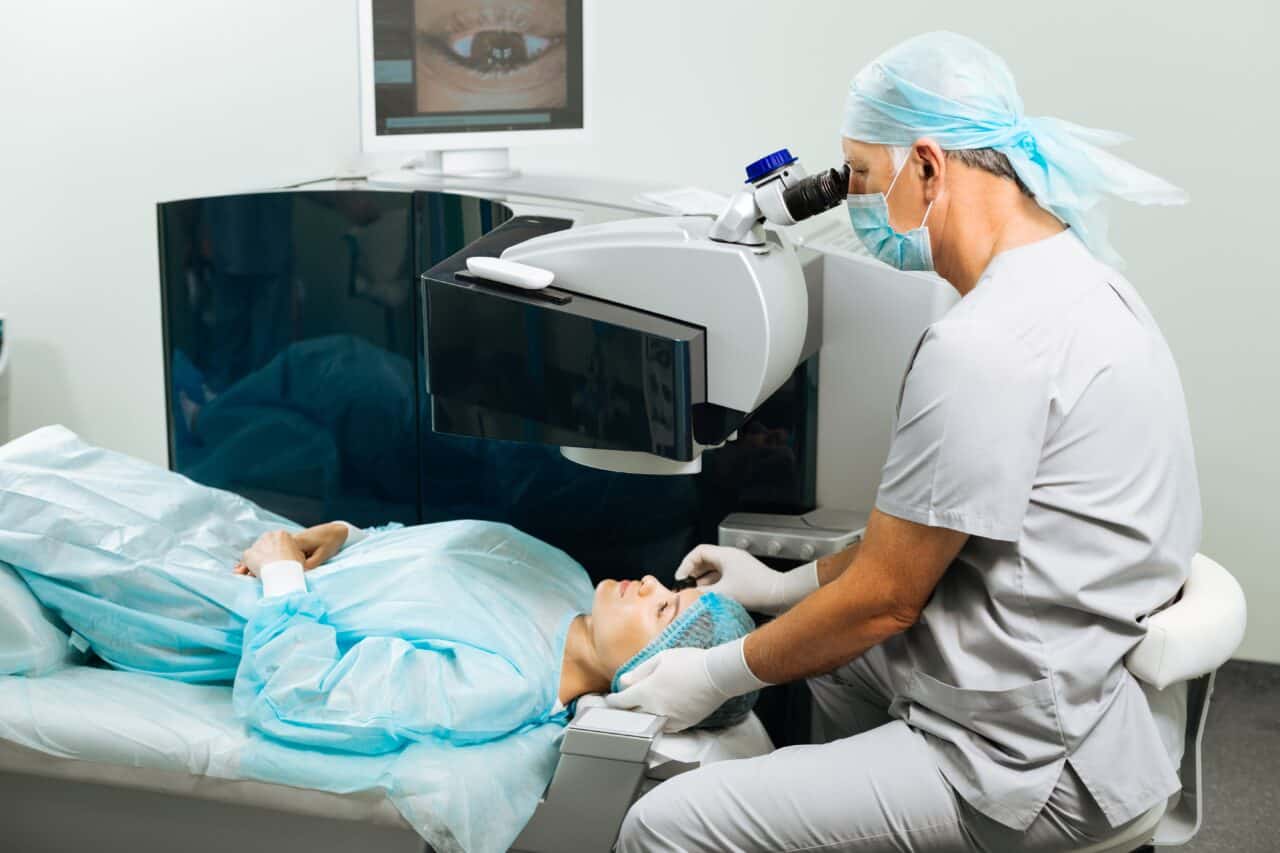
In the field of ophthalmology, intraocular lens (IOL) implants have emerged as a groundbreaking solution to restore and enhance vision. These devices are designed to replace the eye’s natural lens, typically removed during cataract surgery, but their applications extend far beyond cataracts alone.
As technological advancements continue to refine IOL designs, patients now have access to a variety of options tailored to their specific needs—from mono-focal lenses to multifocal and accommodating designs that promise clearer vision at multiple distances.
What Is an Intraocular Lens Implant?
An IOL implant is a synthetic lens surgically inserted into the eye to replace the eye’s natural lens. When cataracts cloud the natural lens, an IOL restores clarity and improves vision. IOLs can be used for other vision correction purposes, such as refractive lens exchange.
They are designed to be biocompatible and can last a lifetime, significantly enhancing the quality of life for those with vision impairments. Implanting an IOL is generally quick, minimally invasive, and performed on an outpatient basis.
How Do IOLs Work?
IOLs work by mimicking the function of the eye’s natural lens, which helps focus light onto the retina for clear vision. They are designed with a specific curvature and optical properties that help focus light onto the retina. Depending on the type of IOL, they can correct various vision issues such as cataracts, nearsightedness, farsightedness, and astigmatism.
What Are They Made Of?
Intraocular lenses are typically made from biocompatible materials, meaning they are safe for use within the body and can integrate well with eye tissues. The choice of material can influence the lens’s properties, such as flexibility, light absorption, and resistance to complications.
Advances in technologies continue to improve these materials, enhancing the performance and safety of IOLs. The most common materials include:
- Acrylic — This is a popular choice for IOLs because it is lightweight, durable, and has excellent optical properties. Acrylic lenses can be either hydrophobic (water-repellent) or hydrophilic (water-attracting), with hydrophobic lenses often used for their lower risk of complications.
- Silicone — Silicone IOLs are also commonly used. They are flexible, allowing for a smaller incision during surgery, and well-tolerated by the eye. Silicone lenses can be designed to provide clear vision at various distances.
- PMMA (Polymethyl Methacrylate) — This is a rigid material used in older IOL designs. While it’s durable, it doesn’t offer the flexibility of modern materials, which may require larger incisions for implantation.
- Hydrophilic Materials — These materials can absorb water, enhancing comfort and reducing glare. They are often used in foldable IOLs, making them easier to implant through smaller incisions.
Who Is a Good Candidate for an IOL?
A good candidate for an intraocular lens implant must meet a variety of criteria. Ultimately, a personalized assessment is crucial, as each individual’s eye condition and vision needs vary.
Those with cataracts affecting their vision are the most common candidates, as IOLs are often used to replace the cloudy natural lens during cataract surgery. Individuals with significant refractive errors, such as nearsightedness, farsightedness, or astigmatism, may also benefit from IOLs, particularly in procedures like refractive lens exchange.
Most candidates are also over the age of 50, as cataracts and age-related vision changes become more prevalent in this age group. Candidates also have generally good eye health, free from serious conditions that might affect the outcome such as uncontrolled glaucoma.
Different Types of IOLs
There are several types of intraocular lenses (IOLs) designed to address different vision needs. Each type of IOL has unique features and benefits, so the choice often depends on individual vision needs, lifestyle, and preferences. A thorough consultation with an ophthalmologist can help determine the most suitable option.
Monofocal IOLs
These IOLs provide clear vision at a single distance. They are commonly used after cataract surgery, and patients may still need glasses for near tasks.
Multifocal IOLs
Multifocal IOLs have multiple zones that allow for clear vision at various distances (near, immediate, and far). They are ideal for patients who want to reduce their dependence on glasses for both near and far vision.
Accommodating IOLs
Accommodating IOLs are flexible and designed to mimic the eye’s natural lens by changing shape slightly as the eye focuses on objects at different distances. They can provide a more natural range of vision compared to traditional lenses.
Toric IOLs
These IOLs are specifically designed to correct astigmatism in addition to nearsightedness and farsightedness. They are suitable for patients with significant astigmatism who want improved vision without glasses.
Extended Depth of Focus (EDOF) IOLs
EDOF IOLs provide a continuous range of vision, focusing light in a way that extends the depth of field. They are effective at reducing glare and halos.
Light Adjustable Lenses
These lenses allow vision to be fine tuned after surgery through controlled ultraviolet light treatments. They are ideal for patients who want the most precise visual outcome possible.
Phakic IOLs
These IOLs are implanted in the eye while leaving the natural lens intact. They are typically used for high refractive errors and are an option for younger patients who are not yet ready for cataract surgery but want vision correction.
What Happens During an IOL Procedure?
The procedure is usually quick, often lasting less than 30 minutes, and is performed on an outpatient basis, allowing patients to return home the same day. Most patients experience a rapid recovery and significant improvement in vision shortly after the surgery. The procedure typically follows these steps —
- Preoperative Preparation — Before the surgery, your eye will be thoroughly examined, and measurements will be taken to determine the appropriate lens power and type.
- Anesthesia — Local anesthesia is administered, often in the form of eye drops, to numb the eye. Some patients may also receive a sedative to help them relax.
- Incision — A small incision (usually about 2.2 to 2.8 mm) is made in the cornea, the clear, dome-shaped cover on the front of the eye. This incision typically doesn’t require stitches as it is self-sealing.
- Removal of the Natural Lens — Using a technique called phacoemulsification, the surgeon inserts a small ultrasound probe into the eye to break up the cloudy natural lens (in the case of cataracts) into tiny fragments. These fragments are then gently suctioned out.
- Insertion of the IOL — Once the natural lens is removed, the folded IOL is inserted through the same incision. The lens unfolds inside the eye and is positioned in the capsule that previously held the natural lens.
- Closure — The incision usually closes on its own without stitches. The surgeon may apply a protective shield over the eye to prevent accidental rubbing or pressure.
- Postoperative Care — After surgery, patients are monitored briefly before going home. Instructions for care, including the use of antibiotic and anti-inflammatory eye drops, will be provided.
Consult an Ophthalmologist at New Vision Eye Center if You Are Thinking About IOLs
If you’re considering an intraocular lens implant to improve your vision, New Vision Eye Center is here to help. Our experienced team of ophthalmologists is dedicated to providing personalized care tailored to your unique needs and lifestyle.
We offer comprehensive consultations to discuss your vision goals, assess your candidacy, and guide you through the latest advancements in IOL technology. With our state-of-the-art facilities and a commitment to patient comfort and satisfaction, you can trust that you’re in expert hands.
Contact us today to schedule your appointment and take the first step towards clearer, more vibrant vision.