
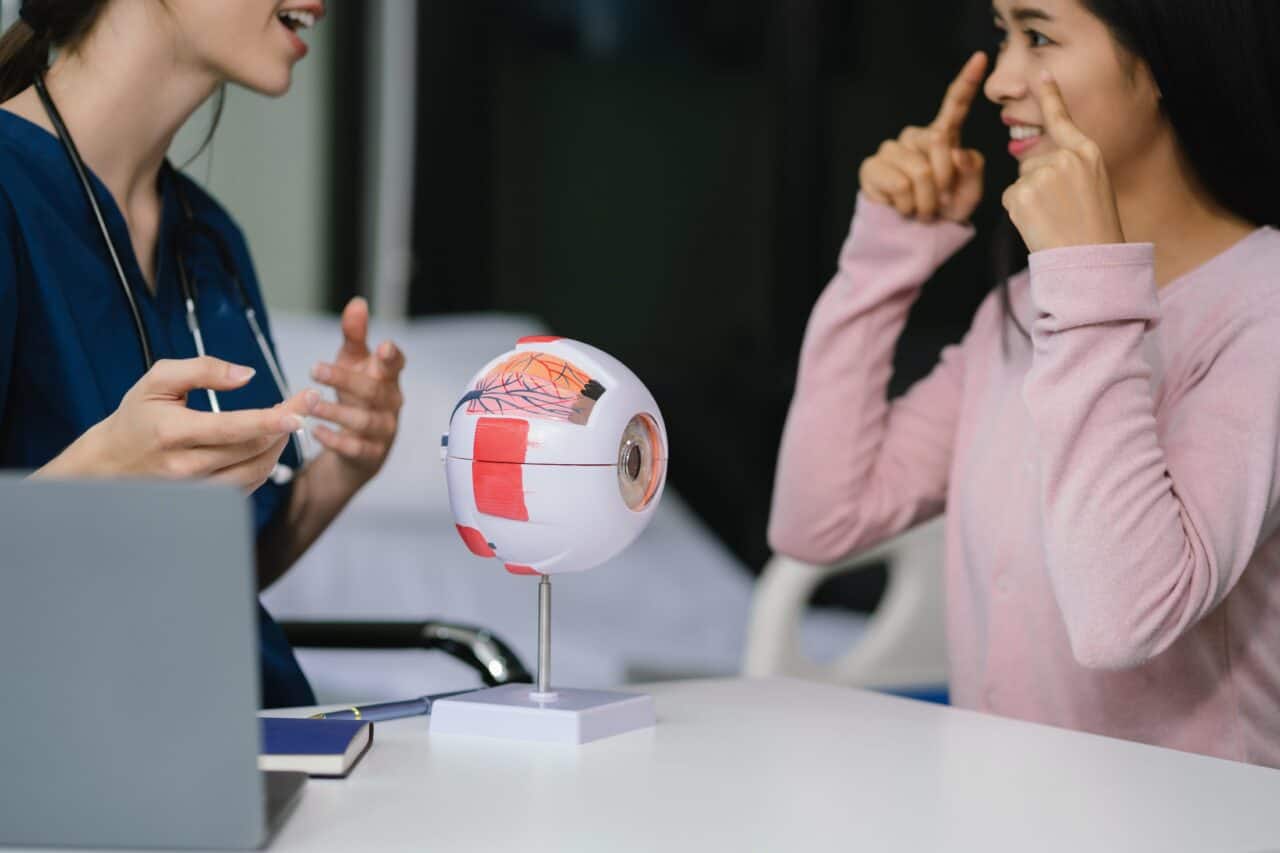
Clear, comfortable vision is something many of us take for granted, until something changes. One of the most alarming vision problems a person can experience is double vision, medically known as diplopia. Seeing two overlapping or side-by-side images can make daily tasks difficult, affect depth perception, and create understandable concern.
While diplopia can sometimes stem from minor issues, it can also indicate a more serious underlying problem that requires prompt attention. Understanding the signs, causes, and treatment options can help patients seek care early and protect their long-term vision.
What Is Double Vision?
Double vision occurs when the eyes fail to produce a single, clear image. It can be constant or intermittent and may affect one eye (monocular) or both eyes (binocular). Because the cause determines the treatment, identifying which type you have is a crucial first step.
Diplopia can appear in several ways:
- Two images side by side
- Images stacked vertically
- Shadowed or ghosted vision
- Fluctuating clarity when looking in different directions
Type of Double Vision
Monocular Diplopia
Monocular double vision remains even when one eye is covered. Monocular diplopia is often less urgent but still requires evaluation, particularly for individuals over 55 who may experience cataracts or dry eye more frequently.
This form is usually related to problems in one eye itself, such as:
- Astigmatism
- Corneal irregularities or scarring
- Dry eye disease
- Cataracts
- Dislocated or displaced lens
Binocular Diplopia
Binocular diplopia vision disappears when either eye is covered. Because binocular double vision can be linked to neurological or systemic issues, it is considered more urgent and should be evaluated promptly.
Binocular diplopia occurs when the two eyes are not working together due to:
- Eye muscle weakness
- Cranial nerve palsy
- Thyroid eye disease
- Diabetes related nerve damage
- Stroke
- Trauma
- Misalignment
Common Causes of Double Vision in Adults Over 55
While diplopia can occur at any age, certain conditions become more common as we get older. Because this age group faces a higher risk for many of these conditions, routine eye exams are essential for early detection and proper management. Common causes of double vision in adults over 55 can include the following:
- Cataracts — Clouding of the natural lens can distort incoming light, causing ghosted or double images in one eye.
- Dry Eye Syndrome — A poor tear film affects the smoothness of the cornea, leading to fluctuating or shadowed vision.
- Diabetes-Related Nerve Damage — Diabetes is a significant cause of cranial nerve palsy, which can temporarily weaken the eye muscles and lead to misalignment.
- Stroke or Transient Ischemic Attack (TIA) — Sudden double vision, especially paired with slurred speech, dizziness, or weakness, requires emergency care.
- Thyroid Eye Disease — An autoimmune condition that affects the muscles around the eyes, leading to bulging, inflammation, and misalignment.
- Corneal Disorders — Conditions such as keratoconus or scarring may distort vision, requiring specialized corneal care or surgical intervention.
- Refractive Errors — Significant astigmatism or changes in the shape of the eye can produce ghosting or double images.
Symptoms That May Accompany Double Vision
Diplopia rarely appears in isolation. Symptoms may worsen in certain gaze directions, in bright light, at night, or after prolonged reading or computer use. Some symptoms patients may experience include:
- Headaches
- Eye strain or fatigue
- Difficulty focusing
- Dizziness or balance issues
- Trouble reading
- Sensitivity to light
- Nausea
- Difficulty walking or driving
Diagnosing Double Vision
Understanding the source of diplopia is key to restoring single, clear vision. Diagnosing diplopia begins with a comprehensive eye exam, but may also include:
- Corneal and Lens Evaluation — Identifies cataracts, dry eye, keratoconus, and corneal irregularities.
- Eye Alignment Testing — Determines whether the eyes are working together properly or if muscle imbalance is present.
- Neurological Assessment — Evaluates nerve function, muscle control, and reflexes, which is critical if double vision appears suddenly.
- Advanced Imaging — MRI or CT scans may be recommended to evaluate neurological causes, especially when symptoms appear abruptly.
- Medical History Review — Identifies systemic conditions such as diabetes, thyroid disease, or prior trauma that may contribute to double vision.
Treatment Options for Double Vision
Because double vision is a symptom, not a diagnosis, the treatment depends entirely on the cause. New Vision Eye Center offers a wide range of solutions tailored to each patient.
Corrective Lenses
- Prism glasses help realign visual images for binocular diplopia
- Specialty contact lenses may help correct corneal abnormalities
Eye Drops and Medical Treatment
- Artificial tears for dry eye
- Anti-inflammatory drops
- Managing conditions like diabetes or thyroid imbalance
YAG Laser Surgery
Patients who have undergone cataract surgery sometimes develop posterior capsule opacification (PCO), which can create blurred or double vision. YAG laser capsulotomy quickly restores clarity by removing the cloudy membrane behind the lens implant, often improving diplopia related to PCO.
Cataract Surgery
If cataracts are causing ghost or double images, cataract removal with a clear intraocular lens (IOL) can resolve the problem.
Strabismus Treatment
Eye muscle misalignment may require:
- Prism lenses
- Vision therapy
- Botox injections
- Eye muscle surgery
Corneal Transplants or Corneal Procedures
For patients with severe corneal disease, such as keratoconus or scarring, New Vision Eye Center’s corneal specialist, Dr. Seery, may recommend advanced corneal surgery or a partial-thickness corneal transplant.
Neurological Care
If the cause is neurological, the ophthalmologist may coordinate care with neurologists or primary care providers.
Temporary Relief Options
Patching one eye can reduce symptoms while the underlying condition is being treated. Most patients experience significant improvement once the correct diagnosis is made and a targeted treatment plan is in place.
When to Seek Immediate Medical Care
Double vision should never be ignored, especially if it begins suddenly. Seek emergency evaluation if diplopia appears with:
- Severe headache
- Difficulty speaking
- Drooping eyelid
- Loss of balance
- Weakness or numbness
- Nausea or vomiting
- Recent injury
These may be signs of stroke, nerve damage, or other severe conditions requiring urgent treatment.
Clear Vision Starts With New Vision Eye Center
If you are experiencing double vision or any sudden change in your eyesight, do not wait to seek care. The specialists at New Vision Eye Center are here to provide prompt evaluation, advanced diagnostics, and personalized treatment to help restore clear, comfortable vision.
Whether your symptoms stem from dry eye, cataracts, muscle imbalance, or a more complex condition, our experienced ophthalmologists will guide you every step of the way. Your vision is too important to ignore.
Contact us today to schedule your consultation and take the first step toward seeing clearly again.