
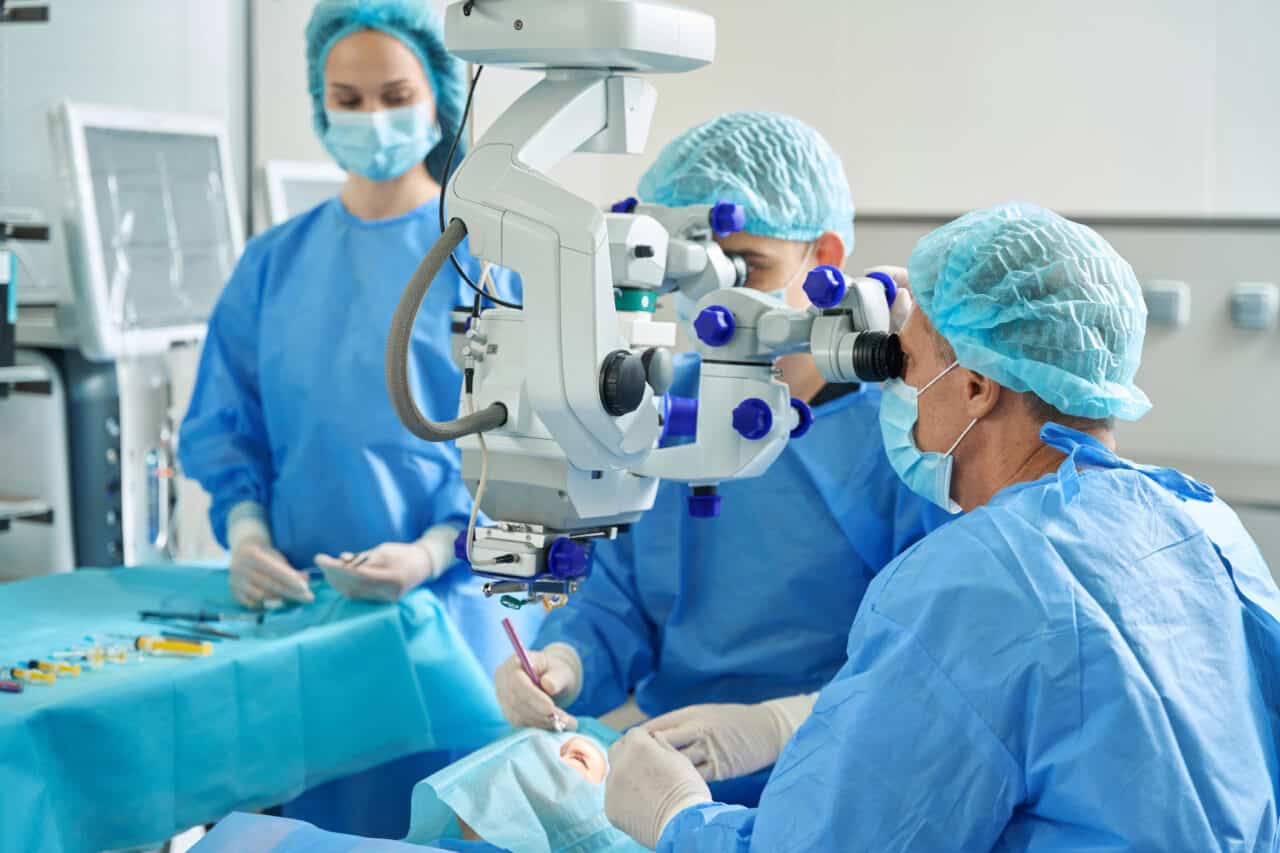
Vision is an essential aspect of our daily lives, and any impairment can significantly impact our quality of life. Cataracts are a common cause of vision loss. Fortunately, cataract surgery is a safe and highly effective procedure that restores vision for many individuals.
However, in some cases, patients may experience a secondary issue called posterior capsule opacification (PCO) following cataract surgery. PCO occurs when the implanted lens capsule becomes cloudy, leading to blurred vision, similar to traditional cataract symptoms.
YAG laser capsulotomy, often referred to as YAG laser surgery or YAG Cap, is presented as a solution to address this condition. This article will discuss posterior capsulotomy and how YAG laser surgery might be necessary after your cataract surgery to address certain issues that may arise.
Understanding Cataract Surgery and Its Aftermath
Cataract surgery involves removing the natural cloudy lens and replacing it with an artificial intraocular lens (IOL) to help restore clear vision. This surgery typically results in significant vision improvement, but the posterior lens capsule can occasionally become hazy.
What is Posterior Capsular Opacification?
When the natural lens of your eye is removed during cataract surgery, some epithelial cells are left over. During the healing process, these cells can migrate and collect on the surface of your implanted lens capsule. Although this can be part of the normal healing process, when these cells build up on your lens implant, they cause the vision to become cloudy or hazy.
Symptoms of PCO
PCO can occur days, months, or even years after cataract surgery. Symptoms of posterior capsule opacification are similar to those of typical cataract symptoms and include:
- Blurry, fuzzy, or cloudy vision
- Haloes or glare around lights
- Light sensitivity
- Problems reading
Risk Factors for PCO
If you’ve had cataract surgery, you are at risk of a secondary cataract. There are additional factors that increase your risk, such as:
- Glaucoma
- Diabetes-related retinopathy
- Uveitis
Understanding Posterior Capsulotomy
Posterior capsulotomy is a surgical procedure performed on the eye’s posterior capsule, a thin, clear membrane located behind the artificial lens implanted during cataract surgery. When a person experiences PCO that affects their vision, a posterior capsulotomy procedure is performed. This procedure creates an opening in the cloudy posterior capsule, allowing light to pass through more clearly and improve vision.
What is YAG Laser Surgery?
The procedure used to perform posterior capsulotomy is often done through YAG laser surgery. YAG (yttrium-aluminum-garnet) laser is a precise and effective tool used in various ophthalmic procedures. During YAG laser capsulotomy, the patient sits comfortably while the surgeon uses a special lens to focus the laser beam onto the cloudy area of the posterior capsule.
The laser creates a small, precise opening in the cloudy capsule without the need for incisions or anesthesia. The procedure is relatively quick, usually taking only a few minutes, and is generally painless for the patient. YAG laser capsulotomy aims to restore clear vision by allowing light to pass through the eye unobstructed.
Reasons for Post-Cataract Surgery YAG Laser Procedure
Several reasons might necessitate a YAG laser capsulotomy after cataract surgery:
- Posterior Capsule Opacification (PCO) — As mentioned earlier, PCO is a common occurrence after cataract surgery. A YAG laser capsulotomy effectively addresses this issue by creating an opening in the cloudy posterior capsule.
- Visual Disturbances — Patients may experience visual disturbances such as decreased contrast sensitivity, glare, or double vision due to PCO. YAG laser surgery helps alleviate these symptoms by restoring clarity to the visual pathway.
- Delayed Vision Changes — Sometimes, vision changes might not become apparent immediately after cataract surgery but develop months or years later. YAG laser capsulotomy can effectively address these delayed visual changes caused by PCO.
What to Expect During YAG Laser Capsulotomy
Before the procedure, your ophthalmologist will conduct a comprehensive eye examination to evaluate the extent of the cloudiness in the posterior capsule. They may administer eye drops to dilate the pupil and numb the eye to ensure patient comfort during the procedure.
During YAG laser capsulotomy, the patient will sit at a specialized laser machine while the surgeon precisely targets the cloudy area on the posterior capsule. The laser pulses create a small opening, allowing light to pass through and restore clear vision.
The procedure only takes a few minutes. Patients typically experience little to no discomfort and can return home and their daily activities shortly after the procedure.
Post-procedure, patients may experience temporary floaters or spots in their vision, but these usually subside within a few days. Vision improvement is often immediate, with many patients reporting a significant enhancement in clarity and quality of vision shortly after the procedure. Still, it can take a few days as the eye heals.
Let New Vision Eye Center Help You See Clearly Again
YAG laser surgery plays a crucial role in addressing posterior capsule opacification, which can occur following cataract surgery. This safe and effective procedure restores clear vision, allowing patients to regain visual acuity and quality of life. By understanding the procedure, its benefits, and potential risks, individuals can make informed decisions about their eye health and take the necessary steps to preserve and enhance their vision.
If you’re experiencing vision changes after cataract surgery or have concerns about your visual acuity, consulting with an experienced ophthalmologist is crucial. They can assess your condition, recommend the most suitable course of action, and, if necessary, perform a YAG laser capsulotomy to help you regain optimal vision and quality of life.
The doctors at New Vision Eye Center provide World-Class Eye Care™ to patients on the Treasure Coast using the latest technology and minimally invasive treatments. Our state-of-the-art surgery center features the most advanced surgical technologies available to ensure you receive the highest level of care.
New Vision Surgical Center focuses on safety, efficiency, technology, and a quality experience for patients. We are licensed by the State of Florida and are accredited by the Accreditation Association for Ambulatory Health Care, Inc. (AAHC), with Medicare Deemed Status, meaning that we have met nationally recognized standards for quality care.
Get the quality eye care you deserve! Contact us today for an appointment.