
As we age, our bodies undergo numerous changes, and our eyes are no exception. One of the most significant age-related conditions affecting vision is macular degeneration—a progressive deterioration of the macula, the central part of the retina responsible for sharp, detailed vision.
Dry age-related macular degeneration (AMD) is the most common variant, accounting for about 90% of all cases. Often developing gradually over time, dry AMD can significantly impact daily activities such as reading and driving, making early detection and understanding of its symptoms essential.
In the United States, more than 19 million people aged 40 and older are living with AMD, and this number will only increase as the population continues to age. This article will provide a comprehensive overview of AMD, including its causes, risk factors, symptoms, and available treatments.
What is Dry Age-Related Macular Degeneration
As the name suggests, dry age-related macular degeneration generally affects people as they age. It is a common eye condition that affects the macula, a small area near the center of the eye responsible for sharp, central vision. It is characterized by the gradual deterioration of the macular tissue over time. While total blindness from dry AMD is rare, it can result in the loss of your central vision.
Unlike wet AMD, which is characterized by abnormal blood vessel growth under the retina, dry AMD typically progresses more slowly and is marked by the accumulation of yellowish protein deposits called drusen in the macula. Dry AMD is by far the more common disease, with about 80% of people who are affected by AMD having the dry form.
Characteristics of AMD
- Drusen Deposits — Drusen are small, yellowish deposits that build up under the retina. They are a hallmark of dry AMD and can interfere with how the macula functions.
- Visual Symptoms — In the early stages, dry AMD may not cause noticeable symptoms. However, as the condition progresses, individuals may experience gradual blurring of central vision, difficulty reading or recognizing faces, and increased sensitivity to glare.
- Slow Progression — Dry AMD typically progresses slowly over years or even decades. The severity of symptoms can vary widely among individuals.
Risk Factors for Developing AMD
The primary risk factor for developing AMD is advanced age. The likelihood of being affected by this disease increases significantly after the age of 50.
Other risk factors include smoking, family history of AMD, obesity, and high blood pressure. You are also more likely to develop dry AMD if you smoke cigarettes and eat a diet high in saturated fats, such as meat, butter, and cheese.
How is it Diagnosed?
Dry age-related macular degeneration is diagnosed in a variety of ways. For example, your ophthalmologist might have you look at an Amsler grid during your exam.
An Amsler grid is a simple square with a black-and-white grid pattern and a dot in the center. Looking at this grid can help identify problems with your central field of vision, as areas of the grid will appear dark, blurry, wavy, or blank if your macular has been impaired.
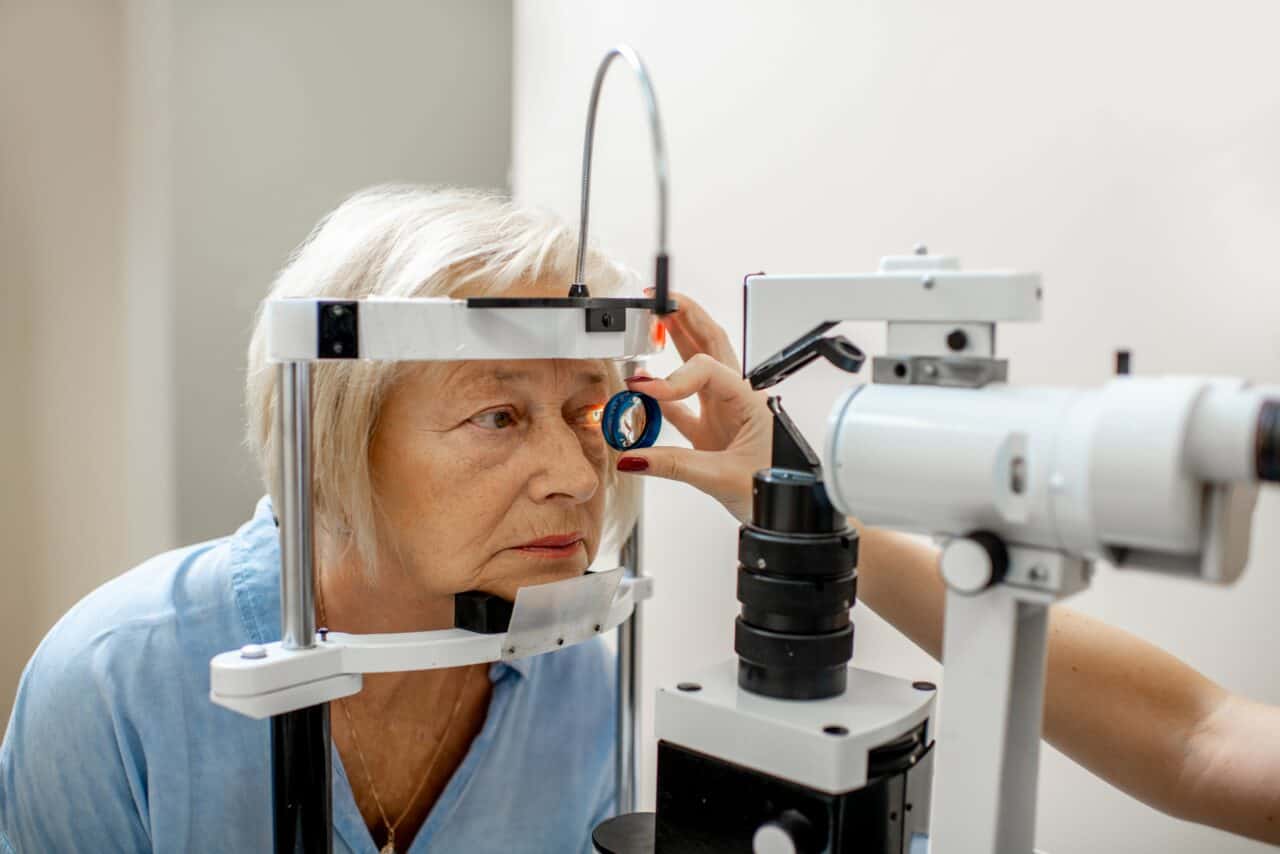
Other ways of diagnosing dry AMD include closely inspecting the retina. Your eye doctor might use dilating drops to widen your pupil so that they can look through a special lens at the inside of your eye. They might also use a technique called optical coherence tomography (OCT), wherein a machine scans the retina using light waves to provide detailed images of the retina and macula.
Symptoms & Progression of Dry Age-Related Macular Degeneration
Dry age-related macular degeneration progresses through several stages, each characterized by different clinical findings and severity of symptoms. The stages of dry AMD are generally classified based on the presence and size of drusen (yellowish deposits under the retina) and the development of pigment changes in the macula.
Progression from early to intermediate AMD and then advanced AMD is not uniform and can vary widely among individuals. Regular eye exams are crucial for monitoring the progression of dry AMD and determining appropriate management strategies to preserve vision and quality of life. If you are experiencing symptoms of dry AMD, you should get in touch with your doctor right away.
Stage 1
In the early stages of dry AMD, while the macula has begun to degenerate, you might not notice any symptoms. In fact, it is highly likely that you won’t. However, your eye care provider will be able to see small or medium-sized drusen on your macula.
Stage 2
In the intermediate stage, some people may notice mild to moderate vision loss or distortion of central vision, such as straight lines appearing wavy. Other symptoms include difficulty seeing in low light and blurriness in your central vision.
Stage 3
Advanced AMD can be further classified into two subtypes:
- Dry Geographic Atrophy — Geographic Atrophy is characterized by significant loss of the retinal pigment epithelium (RPE) and photoreceptor cells in the macula, leading to areas of thinning and loss of central vision.
- Neovascular or Wet AMD Conversion — In some cases, dry AMD can progress to wet AMD, where abnormal blood vessels grow under the retina and leak fluid or blood, causing rapid and severe loss of central vision.
Prevention & Treatment
Unfortunately, at this time, there is no cure for dry age-related macular degeneration. As the disease progresses, your central vision will deteriorate more and more, eventually leading to complete loss of central vision. However, total blindness is rare with AMD, as most people retain their peripheral vision.
In the early stages, dry AMD can be managed by making lifestyle changes and adapting techniques to deal with vision loss. Your doctor might recommend you quit smoking or lower your body weight through diet and exercise. You can also make adaptations to your daily life, such as using brighter lights or a magnifying glass to read.
In terms of treatment, some encouraging studies show that a combination of vitamins and minerals can help people with intermediate or advanced dry AMD keep from losing their central vision entirely. Two clinical trials, called Age-Related Eye Disease Studies (AREDS and AREDS2), found that taking supplements including vitamin C, vitamin E, beta carotene, zinc, copper, lutein, and zeaxanthin were helpful in preventing dry AMD from progressing.
Take Control of Your Eye Health Today
Understanding dry age-related macular degeneration is crucial for anyone concerned about their vision as they age. While there is currently no cure for dry AMD, early detection and proactive management can help slow its progression and preserve vision.
Regular eye exams are essential for monitoring eye health and catching changes early. At New Vision Eye Center, we know how important it is to be consistent with your eye care.
Contact us today to schedule an appointment and take control of your vision health.