
Are you nearsighted (myopia), farsighted (hyperopia), or have astigmatism? Are you tired of glasses and contacts? PRK (photorefractive keratectomy), also referred to as Surface Treatment or AST (advanced surface treatment), is a procedure that may be able to correct your vision.
While you may have heard of LASIK to correct vision problems, some patients can see more of a benefit with PRK, like those with thinner corneas, dry eyes, and medical conditions that could make LASIK too risky. This article will discuss what PRK surgery is, how it differs from LASIK, and the benefits you may experience through PRK surgery.
What is PRK Surgery?
Nearsightedness, farsightedness, and astigmatism are all considered refractive errors. A refractive error is when light doesn’t bend (refract) correctly. PRK surgery is an outpatient surgery that can correct those errors.
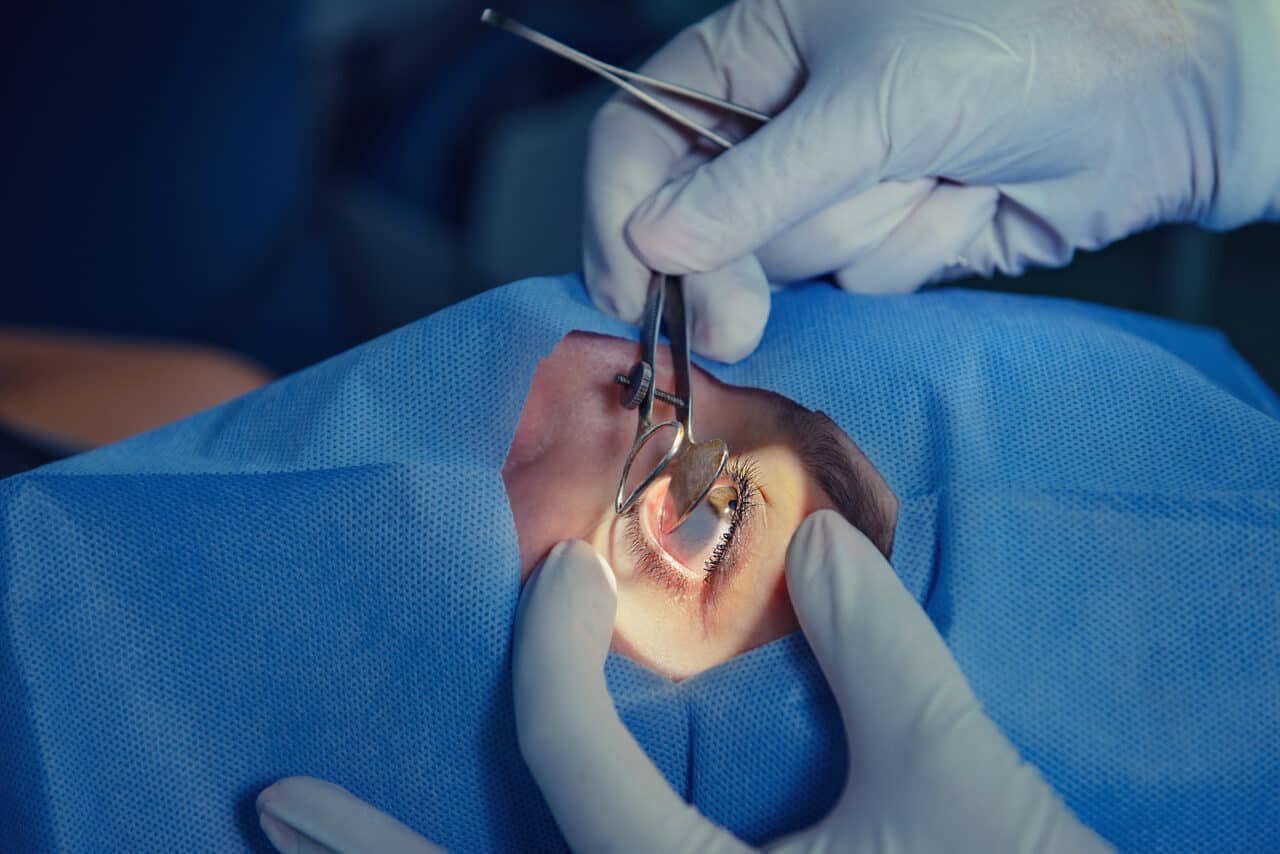
During a PRK procedure, your surgeon will remove the outer layer of your cornea (your epithelium) and use a laser to reshape your cornea. It can be performed on one or both eyes, reducing or eliminating your need for corrective lenses.
Who is Eligible for PRK?
There are specific requirements a patient must meet to be eligible for PRK. After having a discussion with your eye care professional on what you can expect from the procedure, you must:
- Be 18 years old or older
- Have healthy eyes
- Have healthy corneas
- Have a vision prescription that hasn’t changed in the past year
- Understand what the surgery can do and its limitations
You may not qualify for PRK if you:
- Are pregnant or breastfeeding
- Have advanced glaucoma or cataracts
- Currently have an eye infection, blepharitis, or dry eye syndrome
- Have scars on your eyes
- Have cornea diseases or injuries
- Have a refractive error that continuously changes
- Have a disease such as diabetes that affects the healing process
Differences Between LASIK and PRK
PRK and LASIK are both procedures that work on your cornea to correct refractive vision problems. Both use a laser and take approximately the same amount of time. The main difference is that in PRK, your surgeon will use a laser on the surface of your cornea to reshape it, whereas LASIK is performed underneath a corneal flap.
What You Can Expect With PRK Surgery
We’ve prepared an overview of what you can expect when you choose PRK surgery. These are general guidelines and may vary based on a patient’s specific circumstances.
Preparing for PRK Surgery
Before your surgery, your doctor will explain what you can expect from the surgery. They will also evaluate your medical history and test your eyes to measure the size of your pupils, refractive error, cornea, and the general health of your eyes. They will then answer any questions you have and schedule your PRK procedure.
If you wear gas-permeable contacts, discontinue using them at least three weeks before your screening. You shouldn’t wear other types of contacts for at least three days before your evaluation. Be sure to bring your glasses so your doctor can review your prescription.
Eat a light meal before your procedure, and take all prescribed medications. Avoid wearing makeup and having bulky accessories in your hair, which can hinder the surgeon’s ability to properly position your head under the laser. If you aren’t feeling well before your procedure, contact your ophthalmologist’s office to see if the procedure should be rescheduled.
Details of the PRK procedure
You will remain awake during the surgery. After you’ve been prepped for the procedure, the following will take place:
- Your surgeon will apply numbing drops to your eyes.
- A holder will be placed in your eye to keep you from blinking.
- Your surgeon will remove the epithelium using a laser, blade, brush, or alcohol solution.
- They will then reshape your cornea using a laser.
- You will be given nonsteroidal anti-inflammatory eye drops, steroid drops, and antibiotic drops.
- After the procedure, a contact lens will be placed on your eye to help reduce irritation while your eye heals.
After the PRK Procedure
After your procedure, you will need to get rest, avoid physical activity per your surgeon’s instruction, and you may also need to take a few days off work while you heal. Eye pain is common for the next few days and can be controlled by over-the-counter pain medication, or your doctor may prescribe pain relievers in the form of eye drops. Wearing sunglasses outside is essential to avoid scarring on your corneas.
Things may be blurry for the first three to five days but should then begin to improve. You should see significant improvements in your vision after about a month. For approximately the next three months, expect to visit your ophthalmologist at least two to three times.
Benefits of PRK Surgery
Some of the benefits of PRK surgery include the following:
- Highly effective in correcting refractive errors and improving vision enough to reduce or even eliminate the need to wear corrective lenses.
- It can be performed on people with less corneal tissue or with thin corneas.
- Holds less risk of removing too much of the cornea.
- The technique is simpler than LASIK while utilizing the same modern technology.
- More cost-effective than LASIK.
- Since there is no flap, there is less of a risk of complications.
- You’re less likely to experience dry eye.
Get Clear Vision Without Corrective Lenses With New Vision Eye Center
While there are many benefits of PRK surgery, many factors can determine if it is suitable for an individual. Consulting with your eye care professional and a comprehensive eye exam can help determine if PRK is the right option for you.
The doctors at New Vision Eye Center provide World-Class Eye Care™ to patients on the Treasure Coast using the latest technology and minimally invasive treatments. Our state-of-the-art surgery center features the most advanced surgical technologies available to ensure you receive the highest level of care.
New Vision Surgical Center focuses on safety, efficiency, technology, and a quality experience for patients. We are licensed by the State of Florida and are accredited by the Accreditation Association for Ambulatory Health Care, Inc. (AAHC), with Medicare Deemed Status, meaning that we have met nationally recognized standards for quality care.
Get the quality eye care you deserve! Contact us today for an appointment.